
Three Portraits, Three Decades and The Unfinished Quest for Justice

 7
7![The induction of Bhai Gajinder Singh, Shaheed Bhai Gurdev Singh Debu and Justice Kuldip Singh into the Sikh Hall of Fame at the Central Sikh Museum within the Darbar Sahib Complex in Amritsar is more than an honour for three individuals. Together, they form a remarkable troika of Sikh remembrance, spanning the political warnings of the seventies, the killings and detentions of the eighties and the judicial struggle for truth in the nineties. WSN editor Jagmohan Singh examines the significance […]](https://www.theworldsikhnews.com/wp-content/uploads/2026/10/Sikh-Personailities.jpg)
The induction of Bhai Gajinder Singh, Shaheed Bhai Gurdev Singh Debu and Justice Kuldip Singh into the Sikh Hall of Fame at the Central Sikh Museum within the Darbar Sahib Complex in Amritsar is more than an honour for three individuals. Together, they form a remarkable troika of Sikh remembrance, spanning the political warnings of the seventies, the killings and detentions of the eighties and the judicial struggle for truth in the nineties. WSN editor Jagmohan Singh examines the significance of this community remembrance.
The installation of three portraits at the Central Sikh Museum in Sri Darbar Sahib, Amritsar, on 10 October 2026, brings together three personalities whose lives travelled different paths but were connected through one of the most traumatic chapters of contemporary Sikh history. Bhai Gajinder Singh was a political activist, a revolutionary poet and a hijacker by fate; Bhai Gurdev Singh Debu was a young Sikh militant who died in police custody after being showered with boiling water; and Justice Kuldip Singh was a distinguished judge of the Supreme Court of India who nailed the culprits in the unknown bodies cremation case.
At the unveiling ceremony, Acting Jathedar of Sri Akal Takht Sahib, Giani Kuldip Singh Gargaj, and SGPC President Harjinder Singh Dhami recalled the contributions of all three personalities. Giani Kuldip Singh Gargaj said, “We live history. We are not relics of the past. We are living examples of strength of character and commitment.”
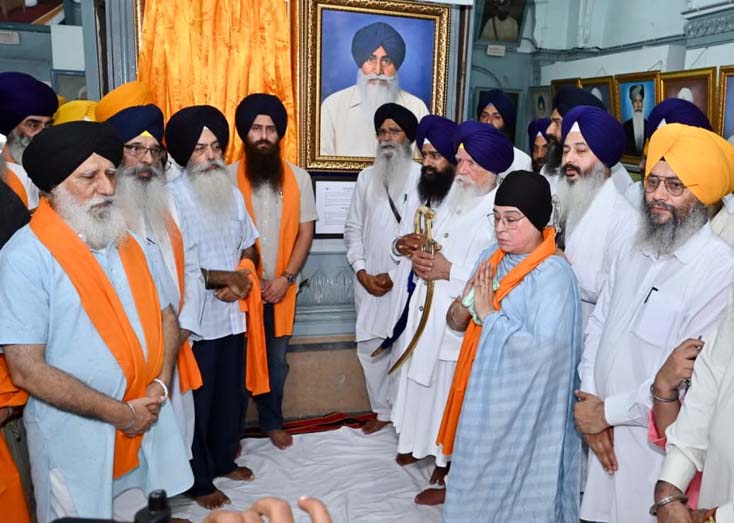
Bhai Gajinder Singh, co-founder of Dal Khalsa,challenged the Indian state politically; another took up arms during the turbulent eighties, while the third served in one of the land’s highest courts. Yet, viewed through the experience of the Sikh people over three decades, their portraits tell a connected story of genocide and the search for justice.
Paying glowing tributes to Gajinder Singh, his associate during his early years of exile and Dal Khalsa ideologue Kanwar Pal Singh said, “Sri Akal Takht Sahib honoured the revolutionary poet for his lifelong contribution by bestowing the title of “Sikh Warrior in Exile” in 2020. The SGPC’s installation of the portraits of the three stalwarts recognises the Sikh struggle for sovereignty by the apex body of the Sikhs.
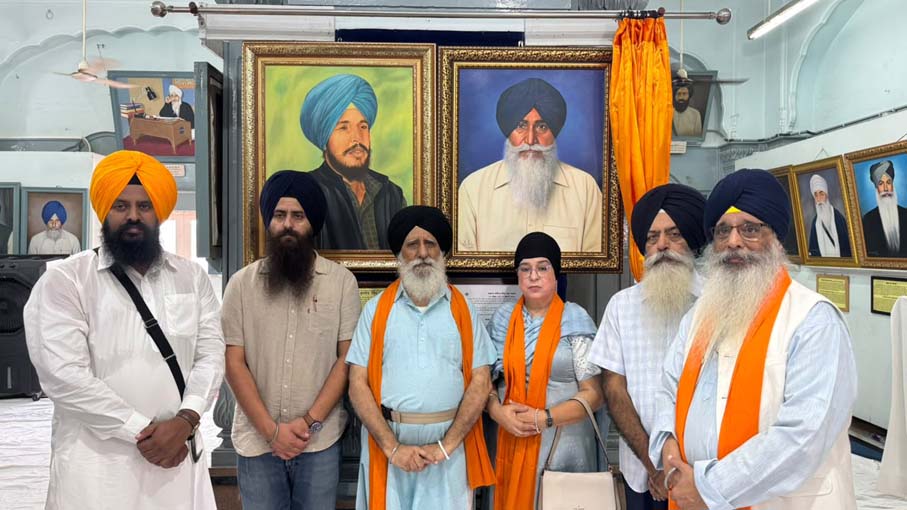
In the late seventies, when the political leadership of Punjab was largely occupied with conventional demands and negotiations, Gajinder Singh and his associates were raising questions about the political future and security of the Sikh nation. Gajinder Singh warned of the possibility of genocidal violence against Sikhs long before the horrors of June and November 1984 unfolded. It was heart-warming to see Gajinder Singh’s soft-spoken brother Darshan Singh and sister-in-law Tarjinder Singh humbly accepting the honours from Jathedar Akal Takht and politely listening to the eulogies showered on Gajinder Singh. Hijacker Tejinder Pal Singh was also present on the occasion and was honoured by the SGPC.
Gajinder Singh, Satnam Singh Paunta Sahib, Tejinderpal Singh, Bhai Harsimran Singh and others cofounded Dal Khalsa in 1978 and eventually faced a life of imprisonment and prolonged exile following the hijacking of an Indian plane to Lahore in September 1981 to protest the detention of Sant Jarnail Singh Bhindranwale and the continuing plight of Sikhs in India.
His political convictions led him and his associates towards the founding of Dal Khalsa in 1978 and eventually to a life of imprisonment and prolonged exile following the hijacking of an Indian plane to Lahore to protest the detention of Sant Jarnail Singh Bhindranwale and the continuing plight of Sikhs in India in 1981.
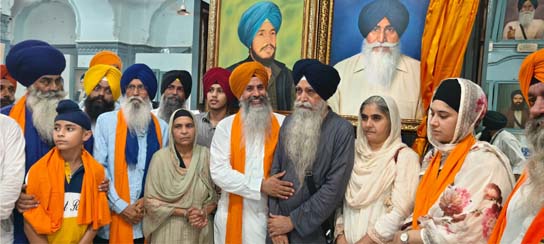
His yearnings and warnings, expressed through his revolutionary poetry and the events that followed, deserve a place in the annals of history. His life reminds us that political dissent, particularly when it questions the relationship between a minority nation and a powerful state, cannot be understood merely through the vocabulary of law and order. Gajinder Singh died in exile, away from his family and homeland, without abandoning the convictions that had shaped his life.
Young Gurdev Singh Debu belonged to the generation that experienced the turmoil which followed the military assault on Darbar Sahib in June 1984, the organised killings of Sikhs in November that year, and the subsequent years of police operations that transformed the political atmosphere in Punjab. Many young Sikhs entered the armed struggle, while countless others became victims of enforced disappearances, custodial torture and extrajudicial executions.
Gurdev Singh Debu, associated with the Khalistan Commando Force, died in police custody in July 1987. His martyrdom was a testimony of the brutality of the security forces -burnt to death with boiling water thrown on him. The circumstances of his killing belong to the larger history of custodial violence and the unresolved questions surrounding that period. His portrait represents a generation who sacrificed their lives to uphold the fight against tyranny and the cause of Sikh right to self-determination.
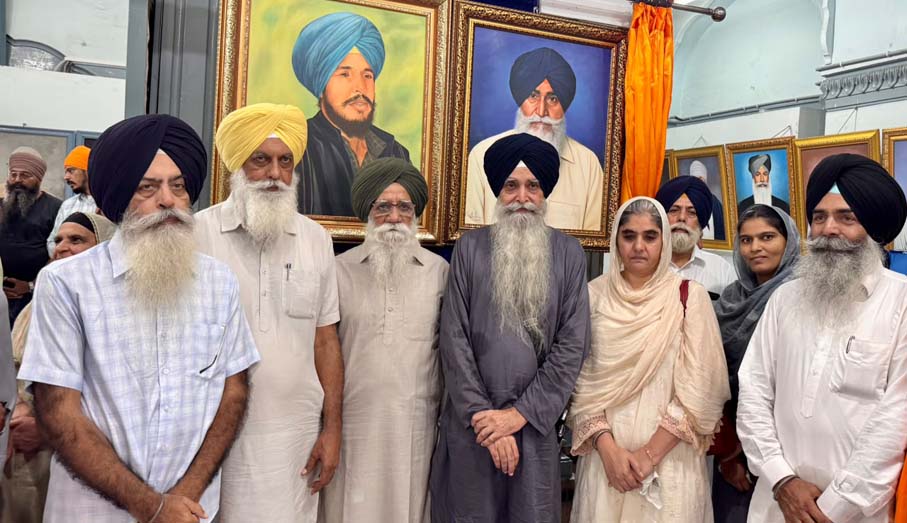
Like the relatives of Gajinder Singh, Gurdev Singh’s mother and other relatives were humility personified, even reluctant to get photographed. Talking about his exemplary martyrdom, leader of the Sikh struggle for sovereignty, Panch Pardhani Jatha leader and armed struggle ideologue Daljit Singh Bittu told the media, “He demonstrated the truthfulness of the Ardas. The severity of his martyrdom in Sikh history is not a folk tale but a real episode of the bravery and fortitude of young men and women who did not flinch before the brute Indian state forces.”
Sikh Siyasat editor Paramjit Singh Gazi, who was also present on the occasion, pointed out that in his published chronicles of the militancy period, Bhai Daljit Singh has mentioned that when Bhai Gurdev Singh Debu and 8 other militants were being subjected to inhuman torture, all of them knew about the hideout of Bhai Daljit Singh, yet no one disclosed anything to the police and embraced death.
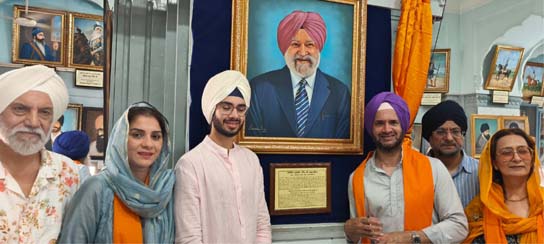
Justice Kuldip Singh’s place in this troika is particularly significant. He was neither a participant in the Sikh political movement nor an advocate of its political objectives. He was a constitutional judge confronted with evidence of grave human rights violations. Justice Kuldip Singh’s family were seen experiencing the glory of the function with the presence of Sikh religious and political leadership. His son and senior advocate Punjab and Haryana High Court, Deepinder Singh Patwalia, said, “When the disappearance of Sikh youth and the secret cremation of bodies came before the Supreme Court, his response demonstrated that judicial responsibility demanded more than passive acceptance of official explanations.”
The cremations of unknown bodies were “worse than genocide.”
-Observation by Justice Kuldip Singh during the proceedings in the case of the hundreds of unidentified bodies cremations discovered and highlighted by human rights activist Jaswant Singh Khalra.
During the proceedings concerning the mass cremations exposed through the work of human rights activist Jaswant Singh Khalra, Justice Kuldip Singh and Justice Saghir Ahmed expressed shock at the evidence placed before them. The observation of Justice Kuldip Singh, during the court proceedings that the cremations were “worse than genocide” remains one of the most memorable judicial responses to the human rights tragedy in Punjab.
Those words carried an extraordinary moral weight. They recognised that the disappearance of a human being, followed by the destruction of the evidence of his death, represented an assault not only on the victim but also on the family’s right to truth, mourning and justice. Justice Kuldip Singh’s intervention showed why the struggle against grave human rights abuses must continue even when institutions have failed and the passage of time threatens to bury the evidence.
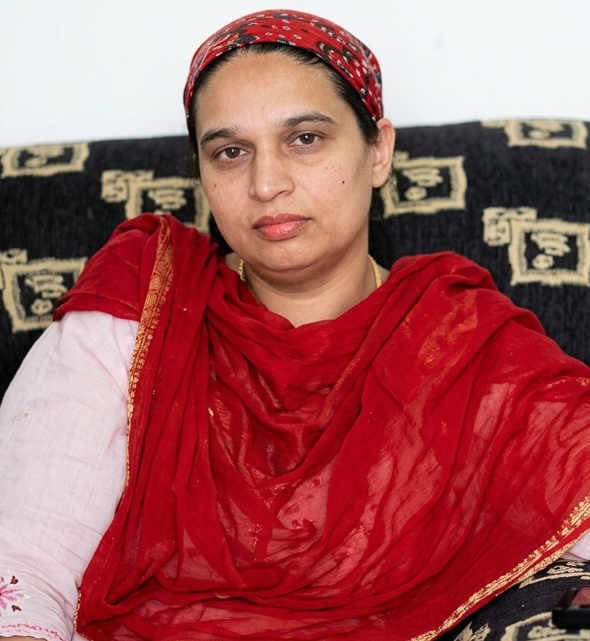
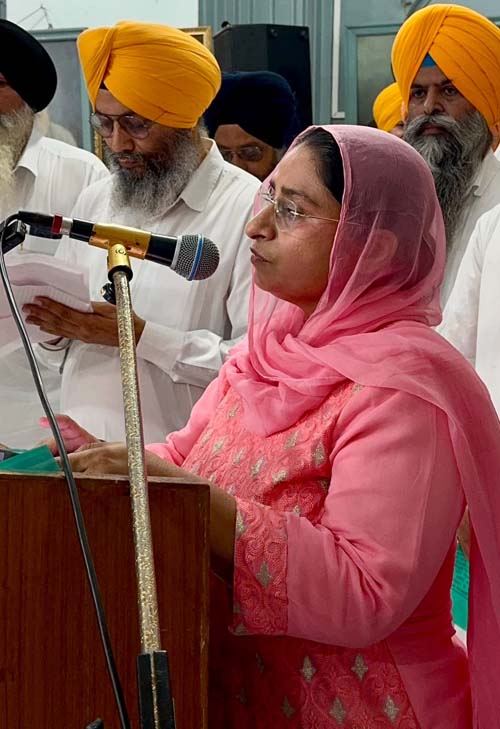
Particularly moving was the message from Gajinder Singh’s daughter, Bikramjit Kaur, who reminded the gathering that although he was her father, he had placed his commitment to the Sikh nation before his family life. He devoted his entire life to the Panth.
“I hope that his portrait will continue to inspire and guide future generations of those who cherish freedom, and that the generations to come will fulfil the dream of Sardar Gajinder Singh and all the Sikh warriors who dedicated their lives to the Sikh struggle for freedom,” she added in her message on the occasion, read to the Sangat by Principal Yashpreet Kaur.
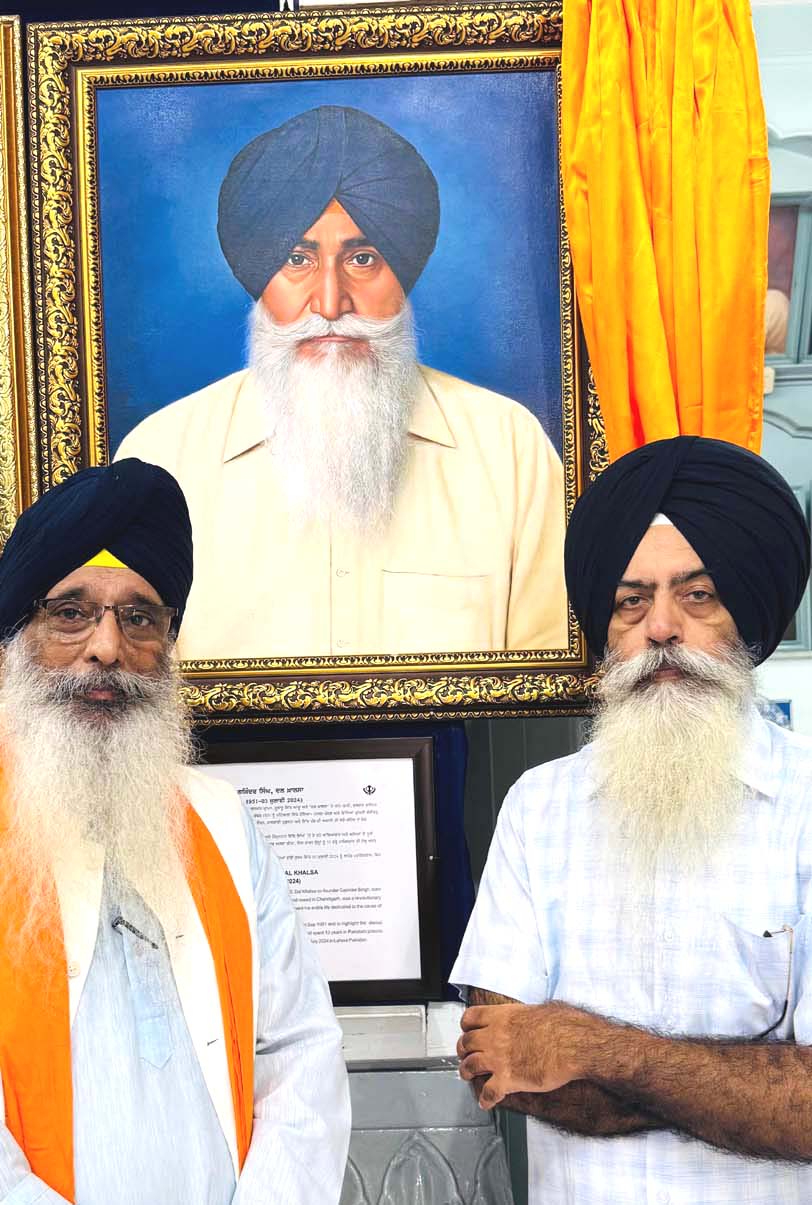
Speaking at the function, WSN editor said, “The Central Sikh Museum is not merely a gallery of distinguished personalities. It is a repository of the collective memory of the Sikhs. In these three portraits together, we see different facets in one frame of the political anxieties preceding 1984, the human tragedy that followed and the judicial effort to confront its consequences.”
The portraits are now on the walls of the Central Sikh Museum. Their history has yet to find its closure.

 Share
Share
 Print
Print
